How to Buy Unlisted Shares in India: Simple Guide for New Investors
Published: 5 min read

Unlisted shares were once a space reserved mostly for institutional investors and family offices. Today, more retail investors are exploring this market because it offers something the public markets rarely provide: early access to strong businesses before the rest of the world pays attention.Think of high-value private companies such as the National Stock Exchange, HDFC Securities, or well-known fintech brands. These businesses have scale, reputation, and steady cash flows, yet they remain outside the stock exchange. Their choice to stay private is not a limitation. It is often a deliberate move that gives them freedom to grow at their own pace.
For investors, this creates a window of opportunity. You get exposure to companies with proven business models long before their IPO. Instead of watching daily market noise, you are giving your capital a chance to grow quietly with the company itself.
Why Pre-IPO Companies Attract Investors
Many private companies are already mature by the time they consider a public listing. They have loyal customers, strong revenues, and tested leadership, which gives them meaningful room to grow further.
Take the National Stock Exchange as an example. By mid-2025, the NSE India carried a valuation near five lakh crore rupees. The scale of its revenue growth over just a few years shows how much value can be built behind the scenes before a company lists.
This is why unlisted shares appeal to long-term investors. You are not chasing short-term price swings. You are trying to capture value during the company’s strongest expansion phase.
Understanding the Diversity of Unlisted Companies
The Indian unlisted market covers many industries. You will find financial giants, consumer companies, technology firms, and brokerage houses all operating privately.
Here is a simple snapshot of a few well-known names:
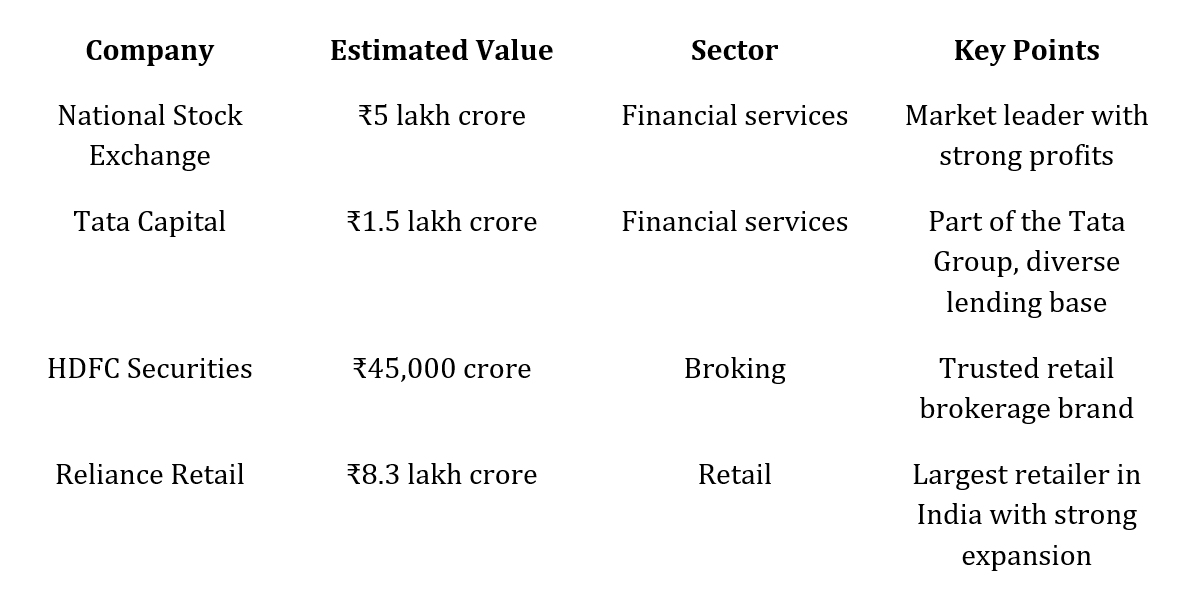
This variety is important. It means investors can explore opportunities based on sector preference, stability, or growth potential.
How Unlisted Share Prices Move
Unlisted shares do not trade on an exchange, so there is no live ticker. Prices are shaped by private deals between buyers and sellers. Over time, these deals form a common price range.
A few major forces influence the price:
Company performance
Strong revenue and better profits can push prices higher.
Industry climate
When a sector grows, it often lifts the valuations of all major players.
Institutional interest
When funds and large investors buy stakes, confidence rises.
IPO expectations
Even a hint of a future listing can increase demand.
Instead of reacting to short-term noise, you look at the company’s fundamentals and future path. This market rewards thoughtful analysis more than speed.
Here is a quick look at how prices vary across the unlisted space in popular shares like BIRA 91,Hero Fincorp etc:
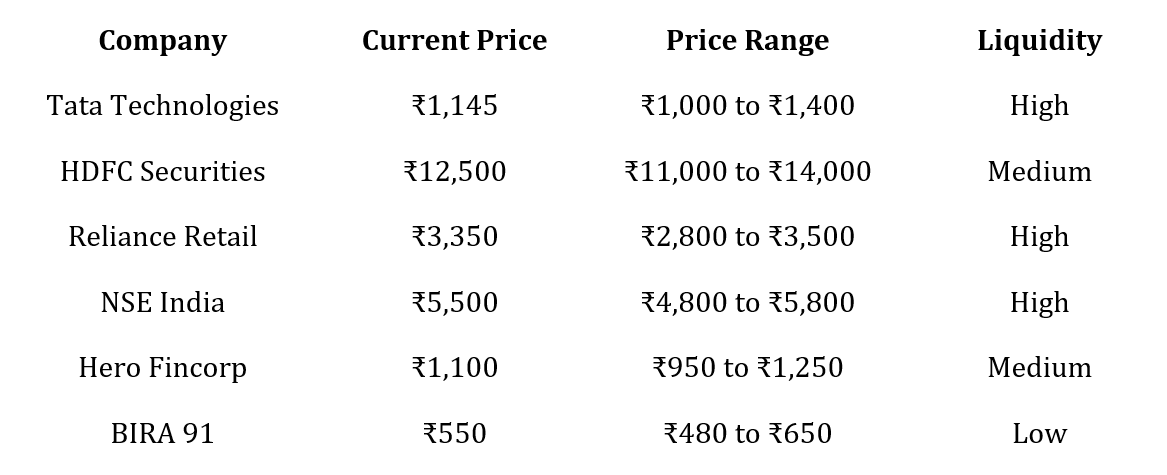
A high price is not automatically expensive, and a low price is not automatically cheap. A fair judgment comes from understanding the company, not the number alone.
Choosing the Right Partner to Buy Unlisted Shares
Selecting the correct intermediary is one of the most important decisions in this journey. You cannot buy these shares the same way you buy listed stocks. You need a reliable partner who brings clarity, access, and proper documentation.
Here are the main channels:
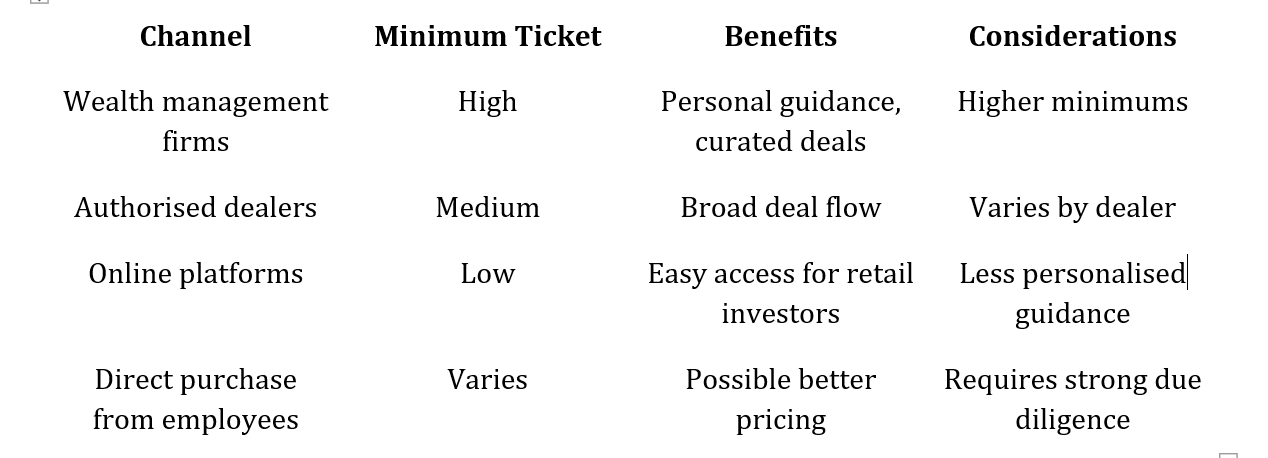
Avoid partners who rush you into a deal or provide unclear documents. Transparency is a better foundation than speed.
Documents You Need to Buy Unlisted Shares
Once you choose an intermediary, the next stage is documentation.
These are the essential documents:
● PAN card
● Aadhaar card
● Recent bank statement
● Demat account proof (Client Master Report)
After that comes the most important document: the SH-4 Share Transfer Form. This form records the sale from the original holder to you. Once signed and processed by the company’s registrar, the shares appear in your demat account.
How to Perform Due Diligence Like a Professional
Unlisted companies do not publish quarterly results. Despite this, you can still access enough information to evaluate them properly.
Here is what you should review:
Financial filings on the MCA portal
You can download balance sheets and profit-and-loss statements.
Business model
Understand the company’s revenue drivers and market position.
Competitive strength
Check whether the company has a unique offering or a strong moat.
Leadership quality
Look for founders and executives with relevant experience.
Customer and employee sentiment
Reviews, feedback, and online discussions can tell a realistic story.
Good due diligence reduces risk and improves your confidence before buying.
Making the Actual Purchase
Once your research is done, the purchase takes place in a few steps:
- You tell your intermediary which company you want.
- They connect with potential sellers.
- Price negotiation takes place.
- You sign the SH-4 and pay through a verified method.
- The registrar processes the transfer.
- Shares arrive in your demat account.
Unlisted share transactions take time. A typical settlement can take a few days to a couple of weeks.
Building a Long-Term Investment Philosophy
Unlisted shares reward investors who think in years, not months. A strong personal strategy includes: A clear allocation limit
● a mix of growth-oriented and stable private companies
● regular monitoring of company updates
● An early plan for your exit
Your exit might come through an IPO, a secondary market deal, or a buyback.
FAQ
1. How can I buy unlisted shares in India?
You buy them through wealth firms, authorised dealers, or online platforms that specialise in private market transactions.
2. Are unlisted shares legal?
Yes. They are fully legal as long as documents and transfers follow regulatory rules.
3. Do I need a demat account?
Yes. Shares are transferred into your demat account after the SH-4 form is processed.
4. What is the biggest risk?
Liquidity. You must be prepared to hold the investment for several years.
5. What causes unlisted share prices to move?
Company performance, institutional interest, sector trend, and IPO expectations.